
Performance per watt is something that isn’t really brought up in discussions about console hardware. Performance per watt has become a rising topic among mobile hardware, laptops and even some desktop PCs (Apple Silicon, AMD Zen 4, etc). The more in-depth discussions revolving around ARM vs x86, RISC vs CISC and TSMC nodes. Efficiency plays a huge role in peak performance, thermals and the obvious battery life in a mobile device.
This is why I believe Nintendo was ahead of the curve (at least in the console arena) for going with an ARM based SoC for their latest console. Now, in 2023, the entire tech industry is heading in that direction. The Tegra X1 was literally the best chip Nintendo could have chosesn for the Switch. No other mobile chip came close in GPU capability and features. Most of the performance issues seen on the Switch are caused by the slow LPDDR4 memory being single-channel and not the GPU.
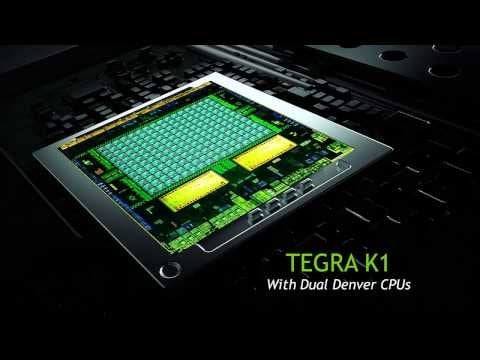
In regards to my argument that the Switch has the best performance per watt of any console, let’s go back to the predecessor to the Tegra X1, the Tegra K1.
​
[The impressive performance per watt of the Tegra K1. Source: Nvidia](https://preview.redd.it/d3u46am6cm2c1.png?width=2317&format=png&auto=webp&s=88a4093d9e3b6a928be57e9bbfd7f927b5564183)
[Nvidia CES 2014 Keynote – Tegra K1](https://www.youtube.com/watch?v=TW8StWcz6Aw)
Back in their 2014 keynote, Nvidia stated that their new K1 chip handily outperformed both the PS3 and Xbox 360 while consuming just 5 watts. That’s 1/20th the power. The Tegra X1 has double the efficiency and double the GPU power. Yes, Nintendo did downclock and power limit the X1 that is found in the Switch, but even then it still vastly outperforms the PS3, 360 and their last console, the Wii U. When you pair that with Nvidia’s excellent NVN API (underrated how great Nvidia did here), you have a lot of performance for something that consumes the same amount of power as your iPhone.
The GPU in the Switch was so good, it wasn’t until the A12 Bionic that we got something that bested it in the mobile space. [Notebookcheck.net comparison chart](https://www.notebookcheck.net/X1-vs-A12-Bionic_6612_10166.247596.0.html)
​
[Source: Digital Foundry, Eurogamer](https://preview.redd.it/1wd4hz3ccm2c1.png?width=2006&format=png&auto=webp&s=4c8bf578fd1fea40d48664ae1901b0ef4826f155)
[Digital Foundry – The New Nintendo Switch Review: ‘Mariko’ Tegra X1 Tested In Depth!](https://www.youtube.com/watch?v=3E2PZ5-IVDw&t=330s)
I feel that even today the Switch easily has the best performance per watt of any console. The X1+ equipped Switch (2019+ models) consumes just 6.5 watts playing Tears of the Kingdom. And that game uses a deferred renderer with PBR materials. Even today, that is very impressive.
The PS5 just idling (doing essentially nothing) consumes more power than the Switch running a full game (PS5 draws 70+ watts just in the home menu). When running a game, the PS5 comsumes well over 200 watts. [Video showing PS5 power draw](https://www.youtube.com/watch?v=t8mP5v5vhRk). RISC based architectures just makes more sense on a console. x86 just has too much legacy bloat for a specialized device like this.
I feel that the power effciency of the Switch is *massively underappriciated.* I mean, look at the Steam Deck. It is roughly 5-6 times more powerful than the Switch, but can consume over 25W. A marginal victory when you are comparing a 16nm chip to a 6nm one from a few years ago. ARM based SoCs can just be designed to be far more efficient with wider cores and thus better IPC. Nintendo’s hybrid approach should be celebrated as it will only become more viable as ARM SoCs improve.
All this being said, I am very excited for the Switch 2 (or whatever it will be called). It will surely outperform the Steam Deck while consuming a fraction of the power, making it truly a mobile masterpiece.